The fireworks may have ended in July, but the learning continued in September at Loudon Elementary School!
On September 18, students across LES participated in special lessons and activities focused on Independence Day, the founding of the United States, and the history and ideas behind the Fourth of July.
Beginning with the 2026–2027 school year, Tennessee public schools are required to ensure that students in grades K–12 annually observe the Fourth of July during the school year through age- and grade-appropriate instruction. The learning includes topics such as the founding of the United States, American independence from Great Britain, the Declaration of Independence, the United States Constitution, and the rights and freedoms of American citizens.
Because Loudon County Schools already observes Constitution Day on September 17, September 18 provided a natural opportunity to continue that learning with a focus on Independence Day. Across Loudon Elementary, teachers brought history to life in ways designed specifically for the ages and learning needs of their students.
PreK: Our Youngest Citizens
Our youngest learners began building an understanding of citizenship through activities that made big ideas accessible to little learners.
PreK students learned about voting and talked about the role of the President. They also explored the Pledge of Allegiance and its place in their school day.
These experiences introduced students to concepts they will continue to explore as they move through school, including citizenship, leadership, national symbols, and participating as members of a community.
Kindergarten: Red, White, Blue, and Kindergarten Too!
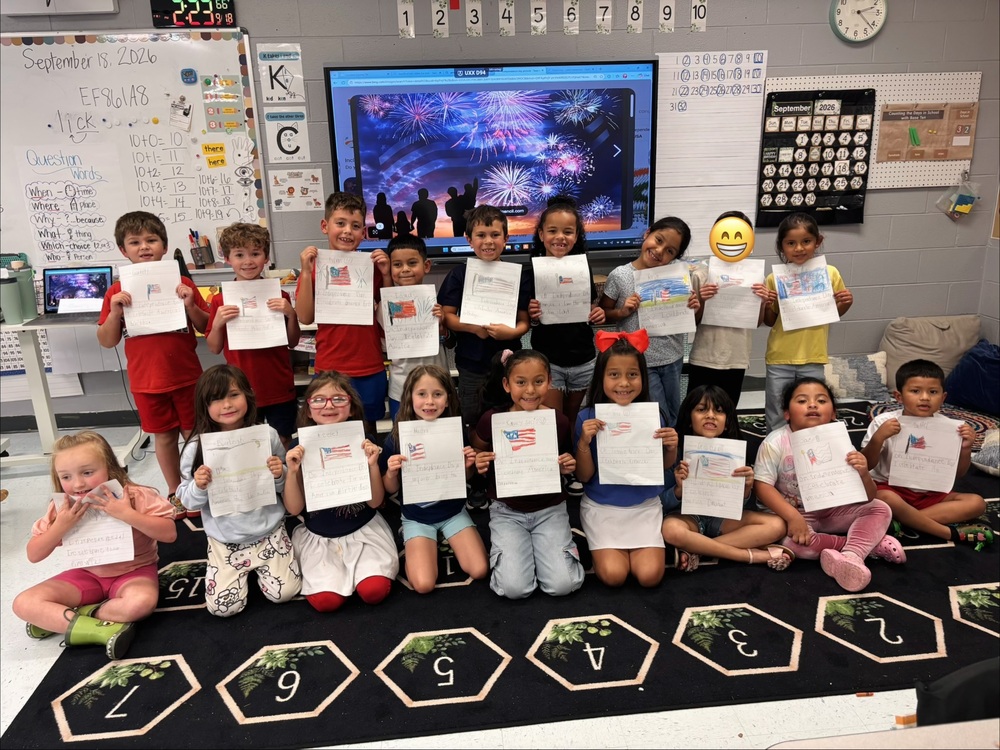
Kindergarten students combined learning and creativity as they discovered more about the Fourth of July and why Americans celebrate Independence Day.
Students learned about the meaning behind the holiday while participating in festive, hands-on activities and creating patriotic crafts. They also explored familiar traditions and symbols associated with Independence Day, including colorful Fourth of July fireworks.
By connecting new learning to traditions children may already recognize from their own experiences, teachers helped make the meaning of Independence Day accessible and memorable for our Kindergarten learners.
First Grade: Happy Birthday, America!
First graders dug a little deeper into the story of American independence.
Students learned about the Declaration of Independence and how the American colonies became an independent country. They also explored why Americans celebrate the Fourth of July each year and connected July 4, 1776, with the idea of America's "birthday."
This familiar comparison helped students begin understanding the significance of an event that happened 250 years ago and why it continues to be remembered each year.
Second Grade: Learning Through Literature
Second grade brought history, reading, and writing together through the CKLA trade book The Flag We Love.
Through the book's facts and illustrations, students learned about the American flag, its history, and its significance as a national symbol. Their discussions also explored ideas of honor and patriotism and helped students connect the flag to events in our nation's history.
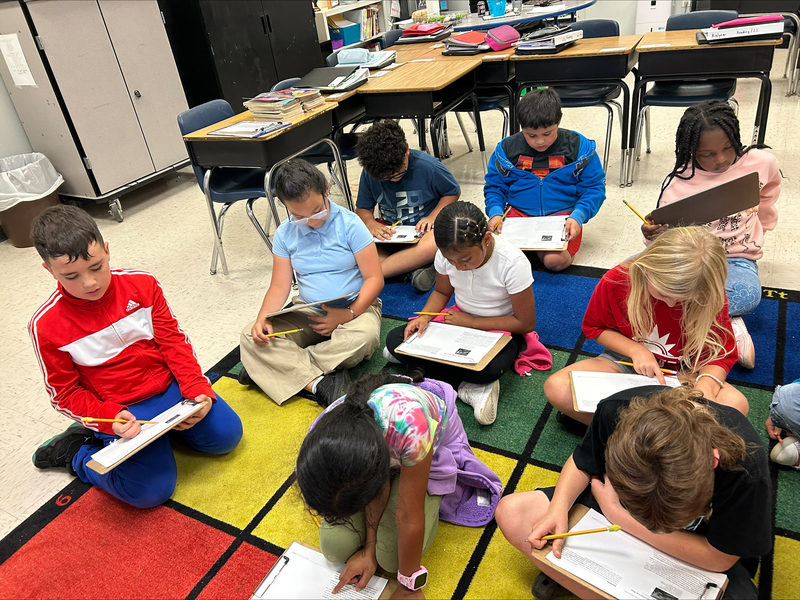
After reading, students put their new knowledge into writing. Using their writing rubric for guidance, students responded to a prompt asking them to explain why we celebrate the Fourth of July and include at least two things they learned.
The activity moved students beyond simply recalling facts. They had to think about what they had learned from a text, choose important information, and communicate their understanding in writing.
Third Grade: Putting Knowledge to the Test
Third graders added a little friendly competition to their learning!
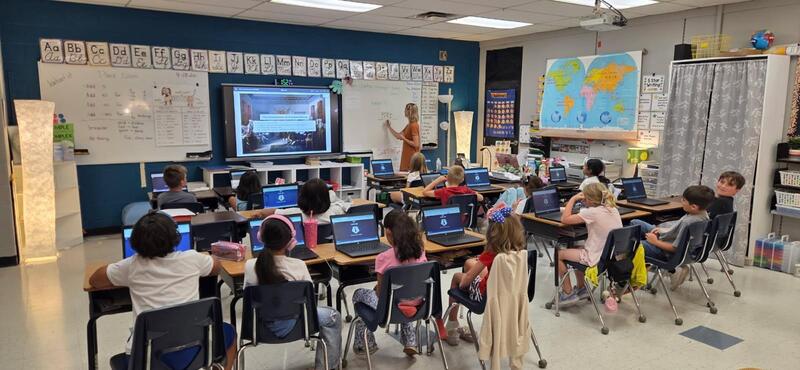
Some third-grade classes participated in a Freedom Week Kahoot, using the interactive game to review and demonstrate their knowledge. Other students read a ReadWorks passage about the Fourth of July and answered text-based comprehension questions.
Whether students were racing to answer a Kahoot question or returning to a passage to locate evidence, third grade combined history with reading comprehension, discussion, and active student engagement.
Fourth Grade: Connecting Independence to the Constitution
By fourth grade, students were ready to begin connecting major events and ideas from different periods of American history.
Students explored the American Revolution and discussed why many colonists objected to being governed by Great Britain without representation in decisions that affected them. They learned how the colonies eventually declared their independence and how the new nation later faced another challenge: creating a system of government of its own.
That learning provided a bridge to Constitution Day. Students learned that the United States Constitution established a framework for the federal government, divided governmental powers, and created structures designed to prevent too much power from being concentrated in one place.
The lesson helped students begin connecting America's fight for independence with the later development of the system of government established by the Constitution.
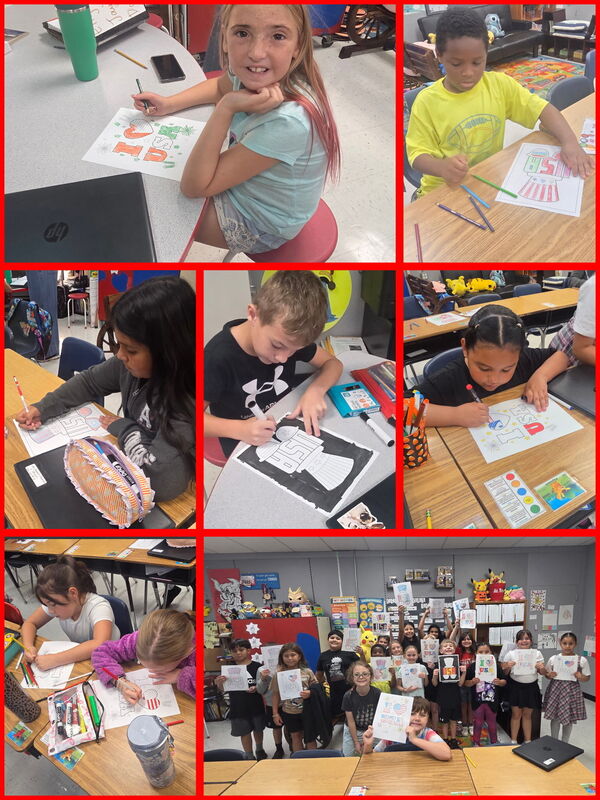
Fourth grade finished the experience on a celebratory note by listening to a patriotic song and completing patriotic coloring activities.
Fifth Grade: Making the Bill of Rights Make Sense
Our fifth graders took on perhaps the biggest challenge of the day: tackling the language of the Bill of Rights!
Students examined portions of the first ten amendments to the United States Constitution and worked to make sense of language written more than two centuries ago. They identified unfamiliar words and phrases, discussed the meaning of the text, and then rewrote key ideas in more modern, student-friendly language.
Through this work, students explored constitutional protections including freedom of speech and religion, protections for people accused of crimes, and limitations on government power.
Rather than simply memorizing a list of amendments, students had to read closely, analyze language, discuss meaning, and then demonstrate their understanding by explaining those ideas in their own words.
From PreK to Fifth Grade: Learning That Grows With Our Students
One of the most exciting parts of the day was seeing how the learning grew along with our students.
Our youngest learners began with familiar ideas such as the Pledge of Allegiance, voting, celebrations, and national symbols. First and second graders began connecting those symbols and traditions to historical events and texts. Third graders applied reading and comprehension skills to their study of Independence Day. By fourth and fifth grade, students were making connections among historical events and examining the language and ideas found in documents such as the Constitution and Bill of Rights.
The activities were different because our students are different, but each grade added another piece to students' growing understanding of American history and government.
At Loudon Elementary, learning about citizenship also connects naturally to the PRIDE traits we work to demonstrate every day: Perseverance, Respect, Inclusion, Dependability, and Empathy. As students grow in their understanding of history, rights, freedoms, and citizenship, they are also learning what it means to listen to others, respect different perspectives, contribute to a community, persevere through challenging learning, and recognize that their actions affect the people around them.
Those lessons extend far beyond a single day on the calendar.
It may have been September 18 instead of July 4, and there may not have been any real fireworks in the LES hallways, but our students still found plenty to celebrate.
At Loudon Elementary, it was a day full of red, white, blue—and lots of learning!